System Architecture
Briefcase AI integrates seamlessly with your existing AI ecosystem, providing governance capabilities without disrupting your current workflows.
Architecture Overview
Briefcase AI operates as a governance layer positioned strategically between your AI applications and their decision storage:
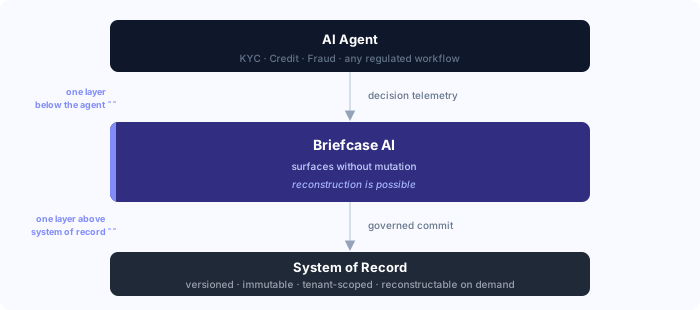
Layer positioning: Briefcase AI sits one layer below the agent and one layer above the system of record, enabling complete decision reconstruction.
Component Architecture
Briefcase AI follows a three-layer design that integrates seamlessly with your existing AI ecosystem:
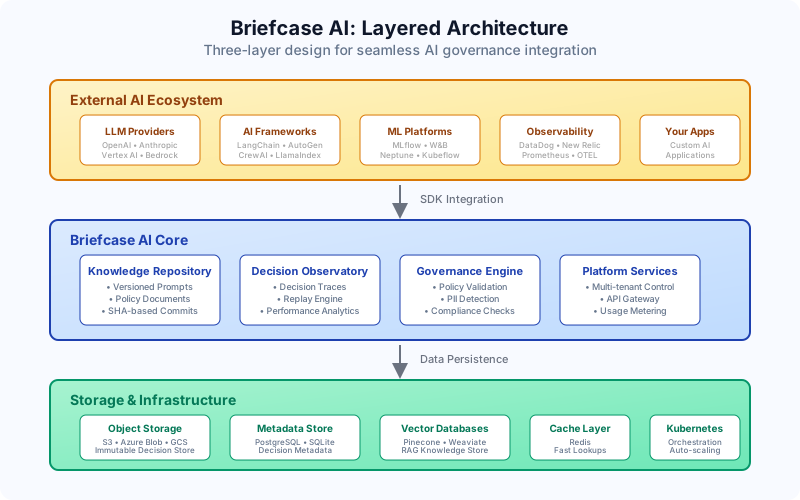
Component architecture: Three-layer design with external AI ecosystem integration, core governance components, and flexible storage infrastructure.
External AI Ecosystem Integration
Briefcase AI works with your existing stack:
- LLM Providers: OpenAI, Anthropic, Google Vertex AI, AWS Bedrock
- AI Frameworks: LangChain, LlamaIndex, AutoGen, CrewAI
- ML Platforms: MLflow, Weights & Biases, Neptune, Kubeflow
- Data Platforms: Snowflake, Databricks, Apache Airflow
- Observability: DataDog, New Relic, Prometheus, OpenTelemetry
Core Briefcase AI Components
AI Knowledge Repository
The version control system for your AI knowledge
- Prompts & Templates: Versioned prompt engineering with SHA-based tracking
- Policy Documents: Immutable business rules and compliance guidelines
- RAG Knowledge: Versioned embeddings and vector store references
- Model Configurations: Tracked hyperparameters and deployment settings
- Zero-Copy Branching: Instant environment duplication for testing
Decision Observatory
Complete observability for every AI decision
- Decision Traces: Immutable snapshots of inputs, outputs, and confidence scores
- Knowledge Linkage: Exact version references for full provenance
- Replay Engine: Deterministic reconstruction of historical decisions
- Correlation Tracking: Multi-step workflow correlation across services
- Performance Analytics: Latency, throughput, and drift monitoring
Governance Engine
Policy enforcement and compliance validation
- Pre-Commit Validation: Policy evaluation before decisions become permanent
- PII Detection: Automatic identification and redaction of sensitive data
- Schema Validation: Ensures consistency across decision formats
- Regulatory Compliance: Automated checks against industry frameworks
- Audit Trail Generation: Complete chain of custody documentation
Platform Services
Enterprise-ready infrastructure and operations
Control Plane
- Multi-tenant isolation with complete data separation
- Role-based access control and API gateway
- Usage metering and billing integration
- Configuration management per tenant
Storage Backends
- Object Storage: AWS S3, Azure Blob, Google Cloud Storage compatibility
- Metadata Store: PostgreSQL, SQLite for decision metadata
- Vector Databases: Integration with Pinecone, Weaviate, Chroma
- Cache Layer: Redis for high-performance lookups
Operational Services
- Horizontal scaling with Kubernetes
- Automated failover and disaster recovery
- Continuous backup and point-in-time recovery
- Multi-region deployment capabilities
Multi-Tenant Isolation
Every tenant operates in a completely isolated environment with no shared data layers:
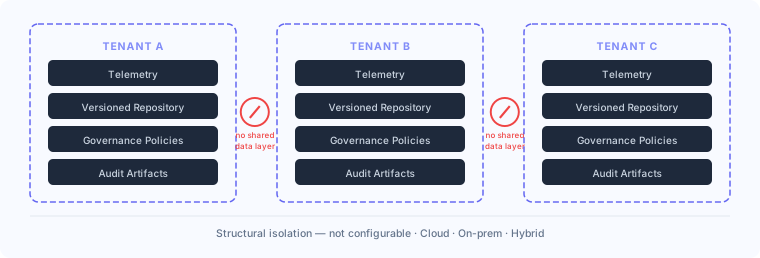
Tenant isolation: Complete separation of telemetry, repositories, governance policies, and audit artifacts with no cross-tenant data sharing.
Data Isolation
Every tenant operates in a completely isolated environment:
- Separate Databases: No shared tables or schemas between tenants
- Independent Policies: Governance rules specific to organizational requirements
- Isolated Networking: VPC/subnet separation in cloud deployments
- Encrypted Storage: Tenant-specific encryption keys for data at rest
Deployment Flexibility
- Cloud-Native: AWS, Azure, GCP with managed services integration
- On-Premises: Complete platform deployment within customer infrastructure
- Hybrid: Control plane in cloud, data plane on-premises for data residency
- Air-Gapped: Fully disconnected deployment for maximum security environments
Decision Capture Flow
When an AI agent makes a decision, Briefcase AI captures the complete context through a systematic flow:
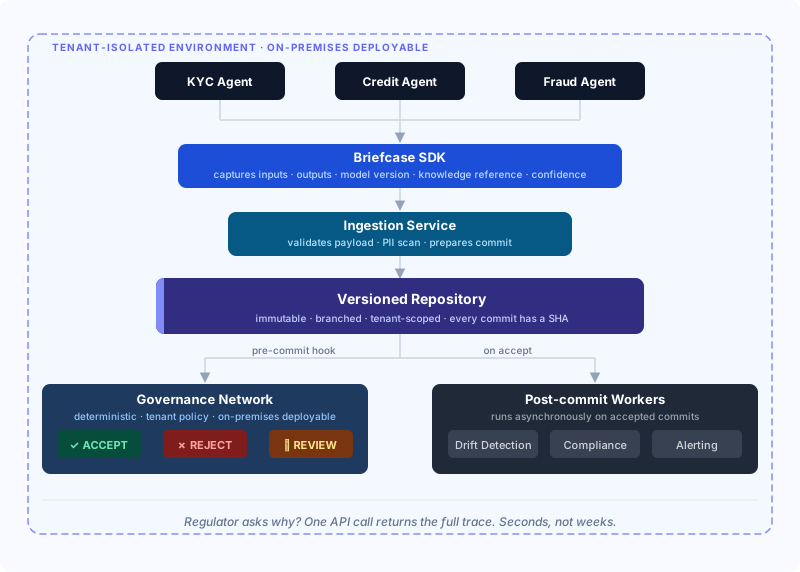
Decision capture: Complete workflow from AI agent decision through governance validation to persistent storage with versioned context.
Integration Points
External Integrations
AI/ML Provider Connections
- OpenAI, Anthropic, Google Vertex AI
- AWS Bedrock, Azure AI Services
- Custom model endpoints
- Framework adapters (LangChain, LlamaIndex)
Observability Platform Exports
- OpenTelemetry traces and metrics
- DataDog, New Relic, Splunk integration
- Prometheus metrics collection
- Custom webhook notifications
Compliance System Interfaces
- ServiceNow GRC integration
- JIRA case management
- Custom policy engines
- Audit trail export formats