System Design
This document covers the operational aspects of Briefcase AI, including data flow patterns, operational services, and performance characteristics. For conceptual understanding, see Core Concepts. For architectural overview, see Architecture.
Executive Summary
Briefcase AI is an enterprise AI governance platform that solves the critical gap between AI deployment and regulatory compliance. While traditional AI tooling focuses on model performance, Briefcase AI provides versioned decision context and runtime observability to make every AI decision traceable, auditable, and reproducible.
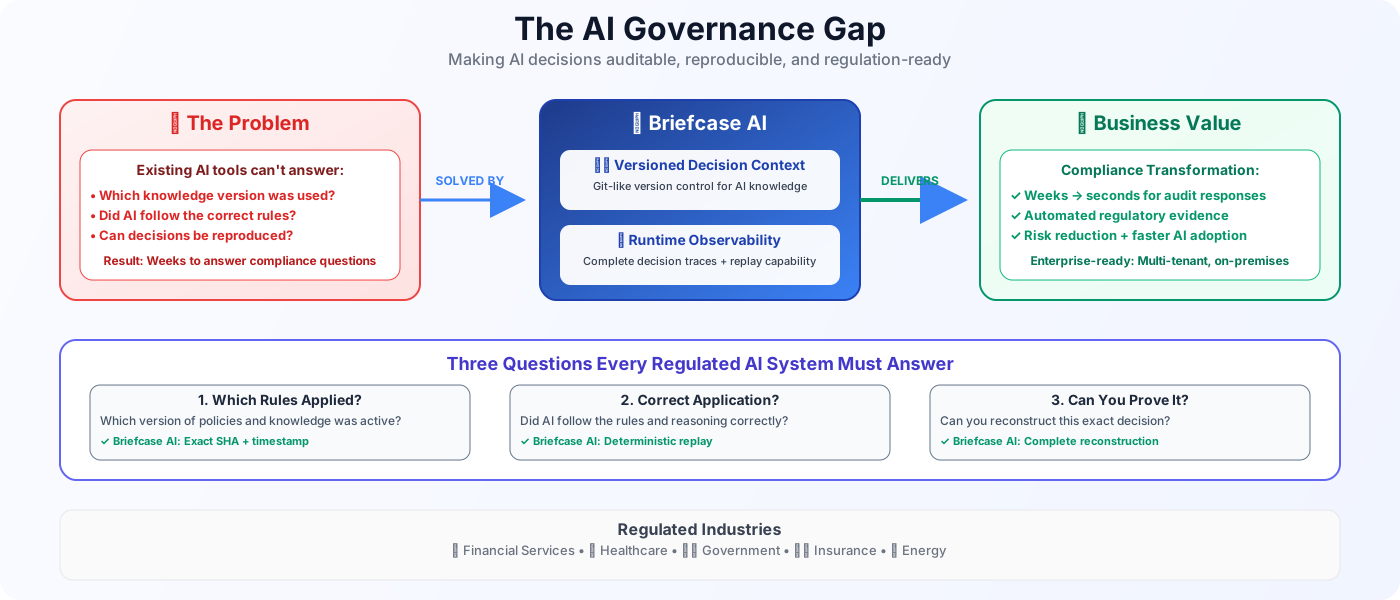
The AI governance gap: how Briefcase AI bridges the compliance void between traditional AI monitoring and regulatory requirements.
Platform Goals
- Traceability: Make every decision linkable to exact versioned inputs and policies
- Auditability: Provide instant access to complete decision context for regulatory review
- Reproducibility: Enable deterministic replay of historical decisions for investigation
- Scalability: Support enterprise workloads with multi-tenant isolation and cloud deployment
- Integration: Work seamlessly with existing AI/ML tools and enterprise systems
Data Flow Patterns
Decision Capture Flow
- Agent Invocation: AI agent processes a request (KYC, credit scoring, fraud detection)
- SDK Instrumentation: Briefcase SDK captures decision context automatically
- Ingestion Pipeline: Validates payload, scans for PII, prepares versioned commit
- Governance Evaluation: Pre-commit hooks evaluate against tenant policies
- Storage Persistence: Decision stored with immutable SHA and version references
- Post-Commit Processing: Drift detection, compliance checks, and alerting
Audit & Replay Flow
- Query by ID: Retrieve decision by unique identifier or filter criteria
- Context Reconstruction: Load exact versioned knowledge state at decision time
- Replay Execution: Re-run decision with identical inputs and knowledge versions
- Output Comparison: Analyze differences between original and replayed results
- Audit Report Generation: Produce structured evidence for regulatory review
Human Review Routing
Low-confidence decisions automatically escalate to human reviewers:
- Confidence Thresholding: Configurable per tenant and decision type
- Queue Management: Priority-based routing to appropriate review teams
- Case Tracking: Complete audit trail of human interventions
- Override Logic: Structured approval/rejection with reasoning capture
Multi-Tenant Architecture
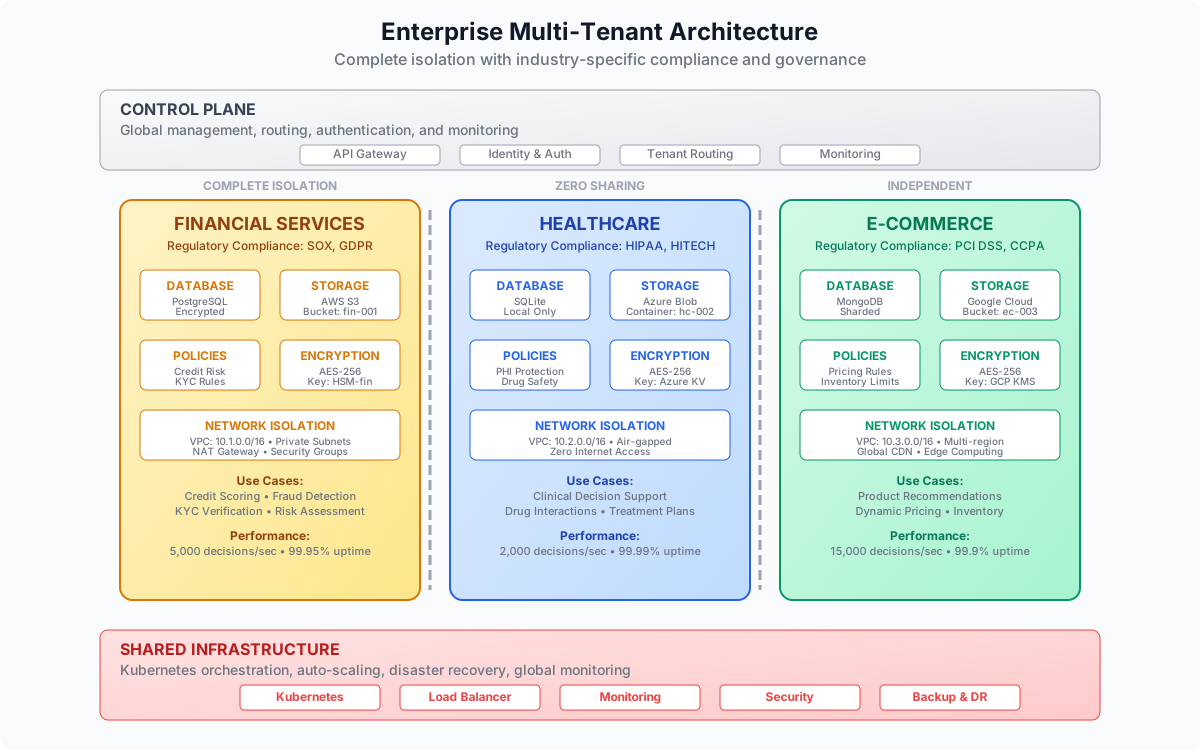
Complete tenant isolation: Each tenant operates with separate databases, independent policies, isolated networking, and tenant-specific encryption keys.
Data Isolation
Every tenant operates in a completely isolated environment:
- Separate Databases: No shared tables or schemas between tenants
- Independent Policies: Governance rules specific to organizational requirements
- Isolated Networking: VPC/subnet separation in cloud deployments
- Encrypted Storage: Tenant-specific encryption keys for data at rest
Deployment Flexibility
- Cloud-Native: AWS, Azure, GCP with managed services integration
- On-Premises: Complete platform deployment within customer infrastructure
- Hybrid: Control plane in cloud, data plane on-premises for data residency
- Air-Gapped: Fully disconnected deployment for maximum security environments
Operational Services
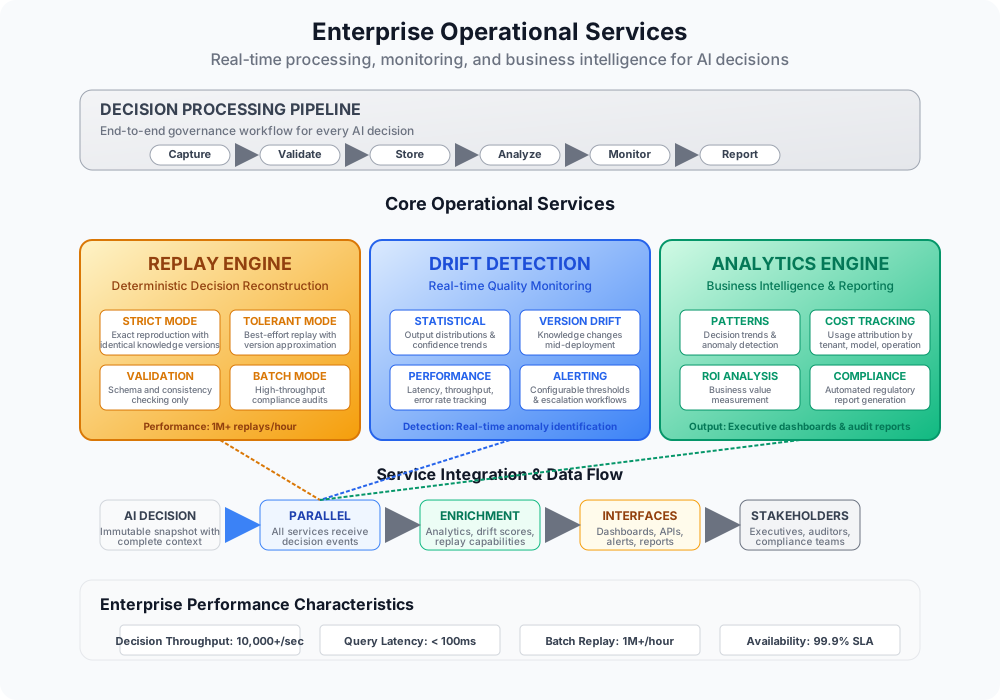
Core operational services: Replay engine for deterministic reconstruction, drift detection for quality monitoring, and analytics engine for business intelligence.
Replay Engine
Deterministic decision reconstruction with multiple modes:
- Strict Mode: Exact reproduction using identical knowledge versions
- Tolerant Mode: Best-effort replay with version approximation
- Validation Mode: Schema and consistency checking without full execution
- Batch Operations: High-throughput replay for compliance audits
Drift Detection
Continuous monitoring for decision quality:
- Statistical Drift: Analysis of output distributions and confidence trends
- Version Drift: Detection of knowledge changes mid-deployment
- Performance Monitoring: Latency, throughput, and error rate tracking
- Alerting: Configurable thresholds with escalation workflows
Analytics Engine
Business intelligence for AI operations:
- Decision Pattern Analysis: Identification of trends and anomalies
- Cost Tracking: Granular usage attribution by tenant, model, and operation
- ROI Calculations: Business value measurement of AI decision automation
- Compliance Reporting: Automated generation of regulatory reports
API Reference
Core Endpoints
- Decision Management: Create, retrieve, and delete decision snapshots
- Replay Operations: Deterministic decision reconstruction
- Validation Services: Policy and schema validation
- Health & Monitoring: Service status and performance metrics
SDK Methods
- Python API:
briefcase_aipackage methods and classes - JavaScript/TypeScript: WASM bindings for browser and Node.js
- LLM Integration: Provider-specific integration patterns
Related Documentation
- End-to-End Workflow: Complete implementation guide
- Regulated Workflow Matrix: Industry-specific compliance patterns
- lakeFS Integration: Version control system setup and configuration
- Multi-Agent Correlation: Cross-service workflow tracking
- Compliance Features: Regulatory framework integration
Performance Characteristics
Throughput
- Decision Ingestion: Ten thousand+ decisions/second per tenant
- Query Performance: Under one hundred milliseconds for single decision retrieval
- Batch Operations: 1 million+ decisions/hour for bulk replay
Scalability
- Horizontal: Auto-scaling based on load with Kubernetes
- Storage: Petabyte-scale with object store backends
- Geographic: Multi-region deployment with data locality
Availability
- SLA: 99.9% uptime for cloud deployments
- Recovery: Under fifteen-minute RTO with automated failover
- Backup: Continuous replication and point-in-time recovery